
Topeka, KS · Garage Door Service
Garage Door Opener Installation for Topeka Homes
New opener installs for Topeka homes built mostly between 1961 and 1990, matched to the track and header height those decades left behind, with cold-weather drive gear that holds up through winter.
- Repairs & new doors
- Springs & openers
- Serving 8 nearby communities
How It Shows Up
Most of the calls we get for opener installation aren't about a dead motor out of nowhere. They're about an opener that's been straining for a year or two before it finally quits - grinding on startup, reversing halfway up, or running the gear so hot the housing smells like burnt plastic. Across the service area, housing stock runs mostly 1961 to 1990, with a median build year around 1973, and that matters more than people expect. A lot of these garages still have the original header bracket layout and short rail clearance that chain-drive openers from that era were built around. When a homeower swaps in a modern opener without checking that geometry, the unit fights the door every cycle. You'll see it as slow travel, a door that won't fully seat, or a safety sensor that trips for no visible reason. In a cold-moderate climate band like this one, winter makes it worse - grease in an old gear housing stiffens up, the chain sags with temperature swings, and a motor that was already working too hard just gives out on the coldest morning of the year. If your opener is straining before it's even failed, that's usually a sign the drive system and the door it's lifting were never really matched to begin with.
The DIY Question
A lot of homeowners can hang a new opener bracket and plug in a logic board - the kit instructions aren't hard. Where it goes wrong is the stuff the box doesn't tell you: setting travel limits on a door with a worn track, matching horsepower to an insulated panel door versus an old uninsulated one, and getting the safety reversal sensors aimed correctly on a header that's not quite square anymore after 50-plus years of settling. We're not going to tell you it can't be done. If your door is newer, your track is true, and you're comfortable with basic electrical work, a straightforward swap is a reasonable DIY job. Where we'd push back is on older homes in this housing band - 1961 to 1990 stock often has non-standard header clearance or a track pitch that doesn't match what current opener kits assume, and that's where a weekend install turns into a return trip to the hardware store, or worse, a door that slams shut because the force setting was never right. If you're unsure which category your garage falls into, that uncertainty itself is the answer - have someone look at the track and header before you buy the opener, not after.
How We Fix It
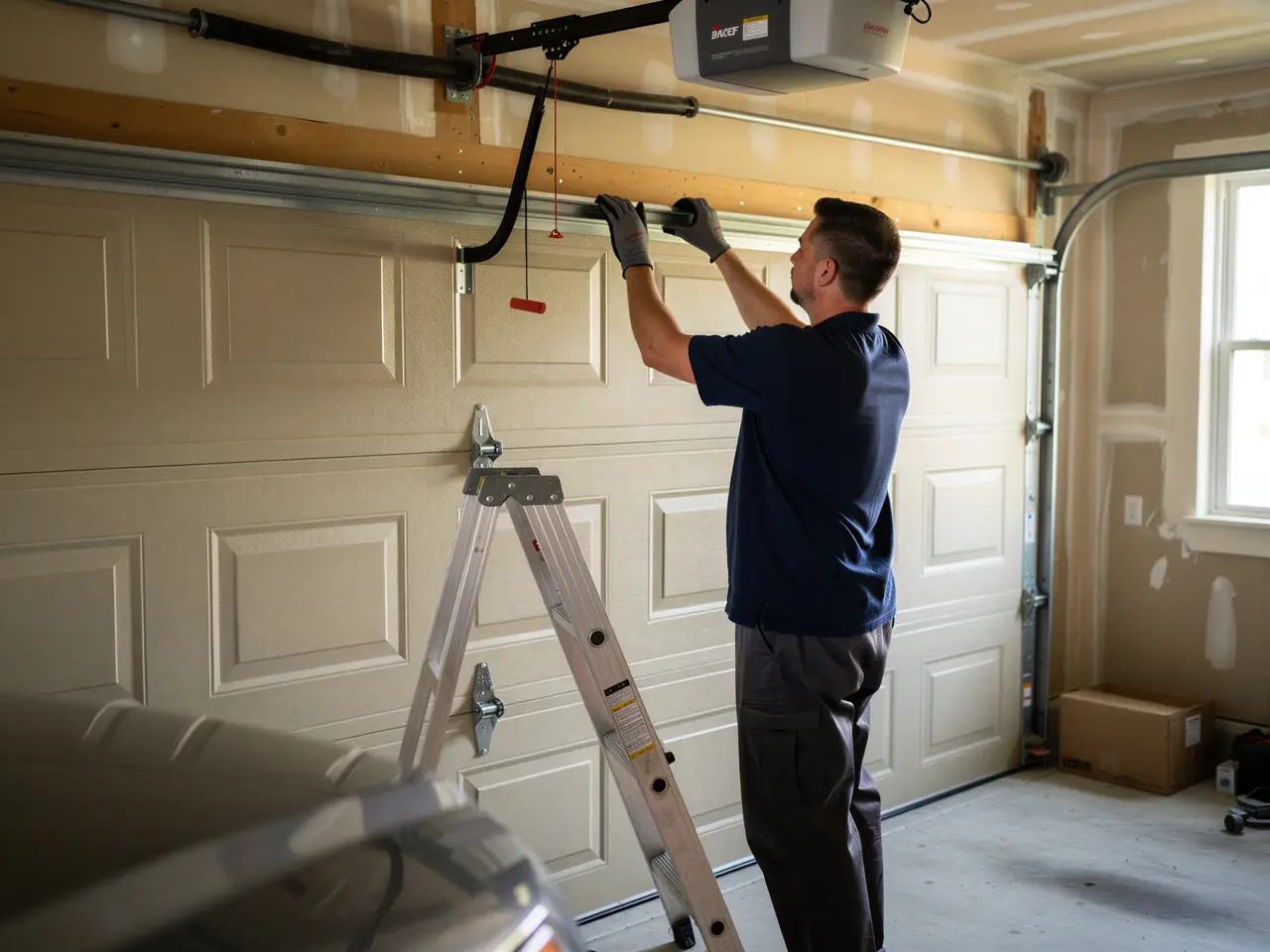
We start at the header and the track, not the opener box. On a lot of the homes we see from the 1960s and 70s stock, the first job is confirming the rail has clearance to run straight back without hitting a joist or a duct that wasn't there when the house was built. Once that's settled, we match the opener to the door - horsepower and drive type (belt, chain, or screw) based on door weight and how the garage is used, not just whatever's on sale. We set travel limits and force settings by hand, test the auto-reverse with a real object under the door edge, and re-check it after a full cycle in cold temperatures when materials have contracted. That last step matters here - a force setting that's correct at 70 degrees can bind at 20, and we'd rather catch that on install day than have you find it out at midnight in January. One limitation worth saying plainly: if your existing track or header bracket is bent or rusted through, we're not going to bolt a new opener onto bad hardware and call it done - that part gets replaced first, which adds to the job but keeps the opener from failing again in six months.
Why This Fails Locally
The math is pretty simple once you line it up. With median household income at $71,875 and roughly 2,382 owner-occupied houses against 3,558 total households across this area, most of the opener calls we take are homeowners maintaining a house they plan to stay in, not flippers doing the minimum. That means the opener installed today needs to hold up through real Kansas winters, not just pass inspection. The housing stock itself - mostly built 1961 through 1990 - was framed for the openers and door weights common at the time, which were lighter and used simpler drive mechanisms than what's sold today. Drop in a heavier modern unit without checking the header and track geometry, and you're asking 50-year-old lumber and brackets to handle a load they weren't sized for. Add a cold-moderate climate band where garages swing from summer heat to hard winter cold, and any mismatch between opener, door, and original hardware shows up faster than it would somewhere milder. That combination - older structural assumptions plus seasonal temperature swings - is why opener installs here need more than a plug-and-play approach.
Frequently asked questions
Will a standard opener kit from a hardware store fit my garage?
It depends on your header clearance and track pitch, which vary a lot in houses built between 1961 and 1990. Some older garages don't have the rail clearance modern kits assume. We check that before recommending a unit rather than after it's already installed.
Does cold weather actually affect a garage door opener?
Yes. In a cold-moderate climate band like ours, grease in the gear housing stiffens, chains sag and tighten with temperature swings, and force settings calibrated in warm weather can bind in winter. We test auto-reverse and travel limits with that in mind, not just at room temperature.
Can I install a new opener myself?
If your door and track are in good shape, a basic swap is doable. On older homes in this area's 1961-1990 housing band, non-standard header clearance or worn track can turn a simple install into a bigger job, so it's worth having someone check the hardware first.
What if my track or header bracket is damaged?
We won't mount a new opener on a bent track or a rusted header bracket - it'll just fail again. That hardware gets replaced as part of the job, which adds cost up front but avoids a repeat call.
Related services
By Neighborhood
Opener Installation across the Topeka area
We also handle opener installation in these Topeka-area suburbs.
Book garage door service in Topeka
Call now or request a quote - tell us what the door is doing and where you are.