
Topeka, KS · Garage Door Service
Garage Doors on Topeka's Older Housing Stock
Most Topeka garages went up between 1961 and 1990, before current insulation rules. Here's what that means for springs, panels, and winter performance.
- Repairs & new doors
- Springs & openers
- Serving 8 nearby communities
What the Weather Here Does to It
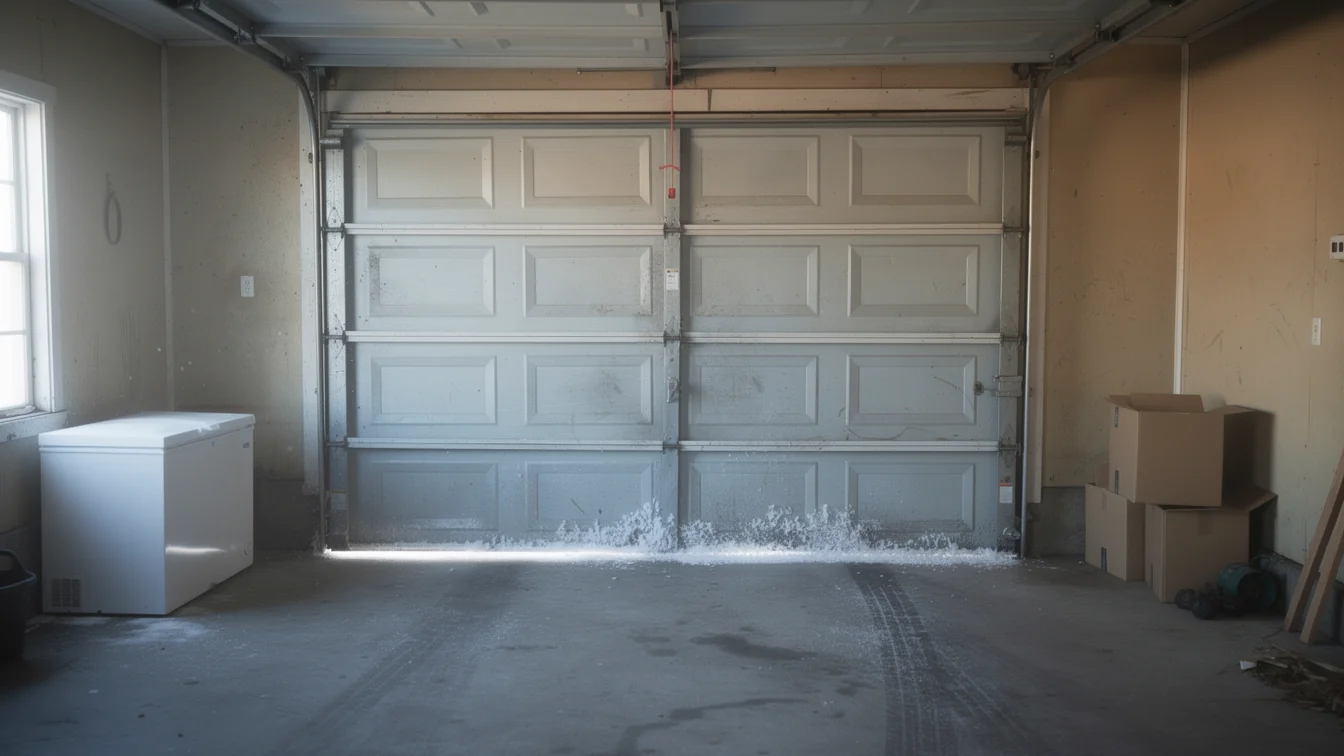
Topeka sits in a cold-moderate climate band, and that matters more for a garage door than most homeowners expect. The swing between a hard freeze and a 60-degree afternoon stresses steel panels, bends weatherstrip out of shape, and thickens grease in torsion springs until the opener strains to lift a door that worked fine in October. Because most housing across this service area - from Central Topeka to North Topeka West to East End - dates to the 1960s and 70s, with the broader range running 1961 to 1990, a lot of these doors and the track hardware behind them were installed before anyone was thinking about thermal breaks or sealed bottom sections as a baseline expectation. That doesn't make them bad doors. It makes them doors that were never built to hold heat in the first place, so when a cold front comes through, you feel it in the attached garage, and sometimes in the room next to it. We see this pattern repeat in Tecumseh and Silver Lake too, where the same building era shows up a few miles out. The fix usually isn't a full tear-out. It's often weatherstrip, a bottom seal, and sometimes insulated panel inserts, which cost far less than replacement and solve the draft without touching the hardware that's still doing its job.
What It Costs
We don't have exact repair or install pricing to quote here, and we'd rather tell you that than guess at a number that doesn't match your door. What we can say is that median household income across the service area runs $71,875, with 2,382 owner-occupied houses among 3,558 total households - a mix that includes a lot of long-held, paid-off homes where a homeowner is weighing whether to fix an aging door or finally replace it. That decision usually comes down to age and damage, not budget alone. A door from the 1973 median build year with a cracked panel and a tired spring is often cheaper to repair than replace. A door with rotted wood sections or a bent track from a backed-into incident usually isn't worth saving. We'll tell you straight which side of that line your door is on before you spend anything.
The Situation
Walk through any of the nine named areas in this service territory - Central Topeka, Downtown, Highland Park, East Topeka, Southwest Topeka - and you'll find the same story under slightly different siding. Housing built mostly in the 1960s and 70s means original one-piece doors or early sectional steel, often on hardware nobody has stocked new in decades. Springs on these doors were sized for a lighter door than what often replaced them over the years, which means an opener straining or a door that won't stay up on its own isn't always age - it's a mismatch that's been building since the last owner swapped panels without rebalancing the spring. We run into this constantly on calls out to Rossville and Carbondale, same build era, same mismatch. It's not a dramatic failure. It shows up as a slow creep: harder to lift by hand, a louder motor, a door that reverses partway for no clear reason. Catching it before the cable snaps is the whole point of a once-a-year look.
The Seasonal Bit
Cold-moderate climates like this one don't demand much in the way of exotic maintenance, but they do punish neglect in a specific order. First the lubricant on rollers and hinges thickens and slows the door. Then weatherstrip that's already decades old on a 1960s-70s build starts cracking at the corners, letting cold air sit right at the threshold. Then, if nobody's looked at the spring tension in a while, the opener starts doing work the spring used to do, and that's what burns out motors early. None of this is unique to any one house - it's the pattern across the whole area, from Meriden out to Perry and Maple Hill. A fall check, before the first hard freeze, catches most of it. We're honest that we can't promise a same-day fix on every call during a cold snap, since that's when everyone's door decides to act up at once - but we'll tell you where you stand in the queue instead of leaving you guessing.
Frequently asked questions
Why is my garage so much colder than the rest of the house in winter?
If your house was built in the common 1960s-70s era for this area, the garage door likely predates any expectation of insulated panels or tight seals. Combined with Topeka's cold-moderate swings, that gap shows up fast. Weatherstrip and bottom seal replacement usually helps more than people expect, without needing a full door swap.
Is my spring the wrong size for my door?
It happens more than you'd think on older houses here, especially if panels were replaced at some point without rebalancing the spring. A door that's hard to lift by hand or that an opener strains against is worth checking before the cable or spring fails outright.
Do you serve areas outside Topeka proper?
We work across the service area including Tecumseh, Silver Lake, Meriden, Carbondale, Rossville, Lecompton, Perry, Maple Hill, and Overbrook, along with the named Topeka sections like Highland Park and North Topeka.
Should I repair or replace an old door?
It depends on what's actually wrong. A worn spring or cracked panel on a door from the common 1973-median build year is usually a repair. Rotted sections, a badly bent track, or a door that's been patched multiple times is usually a replacement, and we'll tell you which applies before you spend money.
Related garage door services in Topeka
More garage door guides
Book garage door service in Topeka
Call now or request a quote - tell us what the door is doing and where you are.