
Topeka, KS · Garage Door Service
What Cold Winters and Older Openers Mean for Your Topeka Garage Door
How Topeka's 1961-1990 housing stock and cold winters affect garage door openers, power outages, and repair costs across Central Topeka, North Topeka, and nearby areas.
- Repairs & new doors
- Springs & openers
- Serving 8 nearby communities
What the Weather Here Does to It
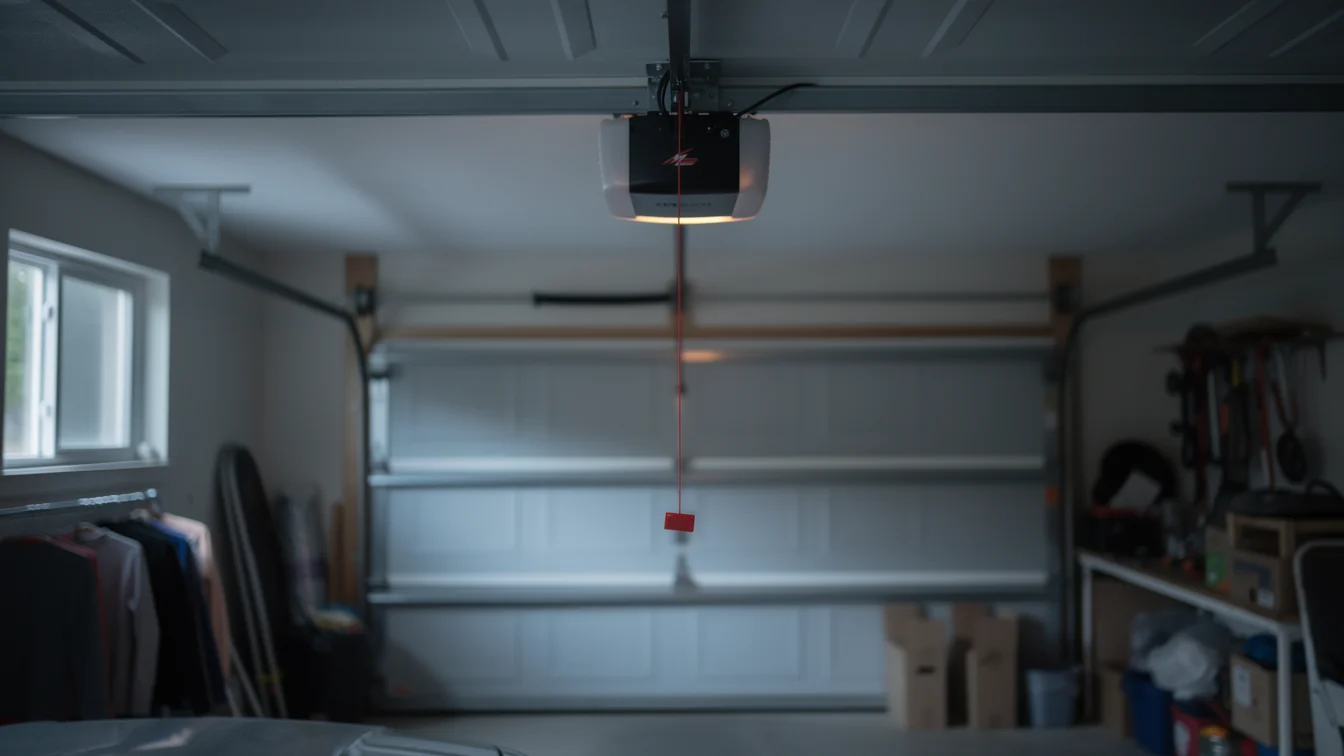
Topeka sits in a cold-moderate climate band, and that matters more for a garage door than most homeowners expect. Steel panels contract in a hard freeze, and the gap between panel and track widens just enough for a roller to ride rough or a cable to slip off its drum. Openers feel it too. A motor that pulls a door open in under ten seconds in July can lag half a second in January because the gear set and the capacitor both slow down in the cold. That half-second doesn't sound like much until a belt-drive opener starts chattering instead of running quiet, or a chain-drive unit needs a few tries before it catches.
The bigger issue in this area is openers and power outages. Cold fronts here bring the kind of grid strain that knocks power out for a few hours at a time, and when that happens a garage door with no battery backup is stuck wherever it last stopped. If it stopped halfway, that's where it stays. Houses built in this area's main stretch - 1961 through 1990 - were wired for openers that assumed steady power and never planned for an outage. We see that gap a lot: the door works fine, right up until the power drops and there's no manual release anyone can find in the dark.
What It Costs
We don't publish a flat number here because what you pay depends on what's actually wrong, and in this area that's often tied to the age of the house. A torsion spring job on a door installed when the house was built in the 1960s or 70s costs differently than the same job on a door from the 1990s, mostly because of hardware size and whether the track is still the original side-mount style common to that era.
What we can tell you: with median household income in this service area at $71,875, most of the repair calls we get aren't emergency money - they're planned fixes once a spring goes or an opener starts acting up. If your door is still running on the opener it had when the house was built before 1990, expect the conversation to include whether a replacement opener with battery backup makes more sense than patching the one you have. That's not an upsell - it's the honest math once a motor is pulling power it struggles to get during a cold snap.
The Situation
Across the service area - roughly 3,558 households, with 2,382 of those owner-occupied houses - the garage door situation tracks the housing stock pretty closely. Most of what's out there went up between 1961 and 1990, median build year 1973, and that spans nine named areas from Central Topeka and Downtown out to North Topeka, East Topeka, and Southwest Topeka. A door from that window is old enough that original hardware is often still in place, but not so old that it's a collector's item nobody services.
That means a lot of the work in this area isn't installing new doors in new builds - it's keeping doors from the 60s, 70s, and 80s running, or finally swapping them for something with a modern opener and insulated panels. We won't tell you every door from that era needs replacing. Plenty of them are solid. The honest answer is it depends on whether the track and spring were ever upgraded, and whether the opener has already been swapped once.
The Seasonal Bit
Cold-moderate winters mean the worst calls cluster in the same few weeks every year, right after the first hard freeze. Springs that were already fatigued from thirty-plus years of cycling finally give out when the steel contracts, and that's a sudden failure, not a slow one - the door won't be halfway broken, it'll be stuck shut or stuck open. We tell people with houses from the 1961-1990 stretch to get a spring checked before that first cold snap, not after, because by the time it snaps you're also dealing with a power grid under strain and an opener that may not have backup.
One honest limitation: we don't stock every obsolete part for every original 1960s or 70s opener. Some of that hardware hasn't been made in decades, and when that's the case, replacement is the real fix, not a workaround. We'll say so plainly instead of billing you for a patch that won't hold.
Frequently asked questions
Why does my opener struggle more in winter?
Cold slows the motor's capacitor and tightens metal gears, so an opener that runs fine in summer can lag or stall in a hard freeze. In this area's cold-moderate climate, that's a seasonal pattern, not a sign the opener is dying - though it's worth a check if it's gotten worse year over year.
What happens to my garage door opener during a power outage?
Without a battery backup, the opener simply stops wherever the door was when power dropped. Most houses in this area built before 1990 never had backup built in, so if you've had outages during cold fronts, a manual release and a backup-equipped opener are both worth having on hand.
Is my old garage door opener worth repairing or replacing?
It depends on the age and whether parts are still made. Some original 1960s-70s hardware is no longer manufactured, and in those cases replacement is the honest fix rather than a repair that won't hold. We'll tell you straight which situation yours is in.
Why do spring failures spike in winter here?
Steel springs that have cycled for decades contract further in a hard freeze, and that's often what pushes an already-fatigued spring to snap. It tends to happen right after the first cold front of the season, which is why checking springs before winter beats dealing with a stuck door after.
Related garage door services in Topeka
More garage door guides
Book garage door service in Topeka
Call now or request a quote - tell us what the door is doing and where you are.