
Topeka, KS · Garage Door Service
Is Your Topeka Garage Door Worth Fixing, or Done
Most Topeka houses date to 1961-1990, and the cold swings here punish original hardware. Here's how to tell if your door is worth repairing or replacing.
- Repairs & new doors
- Springs & openers
- Serving 8 nearby communities
What the Weather Here Does to It
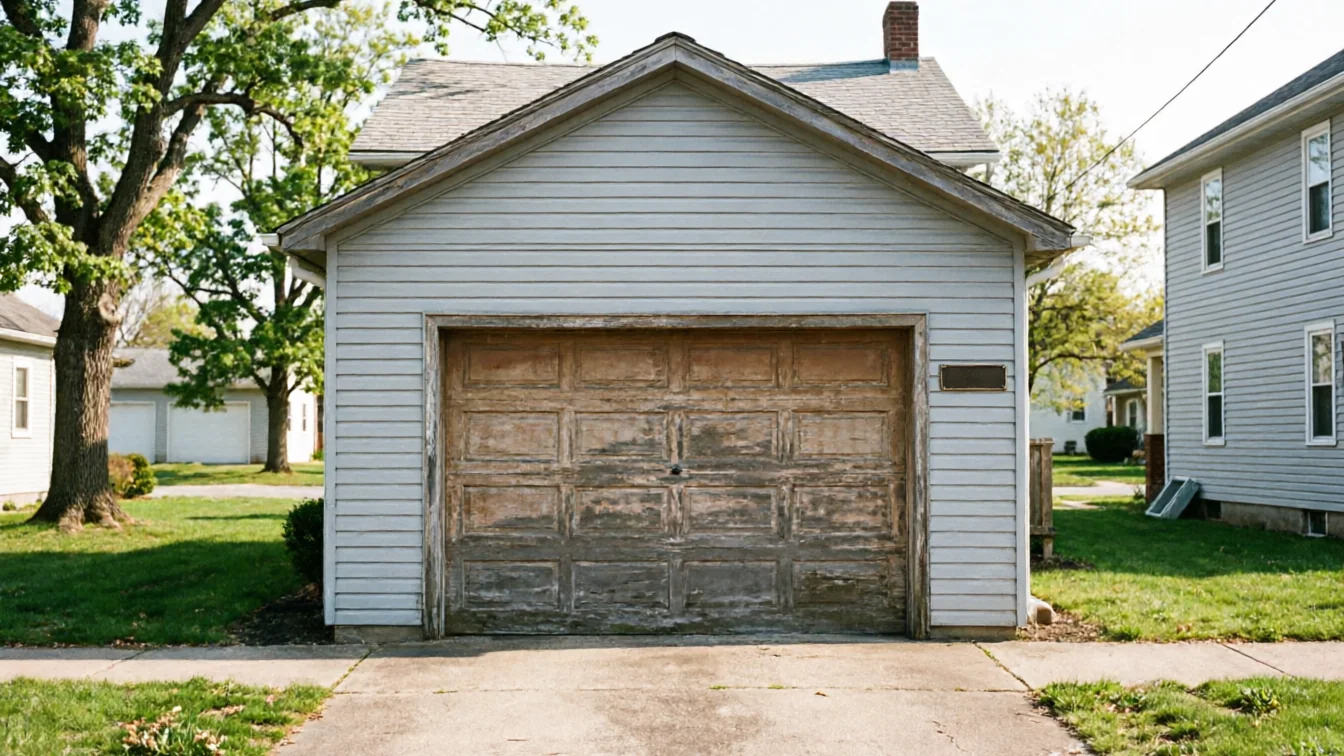
Topeka sits in a cold-moderate climate band, which means the garage door hardware on your house goes through real freeze-thaw cycling every winter, not just a few cold mornings. Steel tracks contract in the cold and the grease in old rollers and bearings thickens up, which is why a door that rolled smooth in October starts grinding or sticking by January. On houses built in the 1961-1990 window - which covers most of the stock across this service area - that original hardware is now 35 to 60 years old. Torsion springs lose tension gradually with every cold-season cycle, and a spring that's been through five decades of winter swings is living on borrowed time even if it hasn't snapped yet. Weatherstripping on doors from that era was never built for today's standards either, so you'll see more bottom-seal cracking and more cold air leaking under the door than you would on newer stock. None of this means the door is junk. It means the moving parts - springs, rollers, hinges, the opener's drive gear if it's original - are the first things to fail, and they fail here on a cold-weather schedule, not a mild-climate one.
What It Costs
I don't have set prices to quote you here, and I'm not going to make up a number. What I can tell you is what drives the cost on a typical Topeka call: whether the spring size matches what's actually on your door (1970s doors often used hardware that's been superseded twice over, so finding an exact match takes longer than a same-day swap), whether the track is original steel or has been replaced, and whether the opener is original to the house or a later retrofit. Median household income in this service area runs $71,875, and across roughly 3,558 households - about 2,382 of them owner-occupied houses - the decision I see most often isn't
The Situation
across nine named parts of the area with housing clustered in the 1960s and 70s, the pattern repeats: original torsion spring, original track, opener added later. If your house falls in that build window and nothing's been touched since, the door itself - the panel - is usually still fine. Steel panels from that era don't rot or warp the way wood ones do. What fails is the spring, the cable, the rollers, or the opener's gear and sprocket. A broken spring on a door that's otherwise sound is almost always worth fixing. A door with a bowed or dented panel, rusted-through track, or an opener that's stripped its gear and is also original to a 1960s build is a different conversation - at that point you're paying repair money toward a system that's going to need the next part replaced within a year or two anyway. I'll tell you straight when I'm standing in front of it which side of that line your door is on.
The Seasonal Bit
The honest limitation: I can't predict exactly when a given spring or opener will fail, only that cold-cycle stress accelerates it on hardware this old. What I'd flag for anyone in this area with a house from the 1961-1990 build era is to get the springs and rollers looked at before the first hard cold snap each year, not after a door won't open on the coldest morning of the winter. That's the call I get most - a door that worked fine in September and won't budge in December, because the cold finally finished off a spring that was already most of the way gone. If your door is already sticking, grinding, or closing unevenly now, that's the warning sign, and it's cheaper to deal with in October than in a January emergency call.
Frequently asked questions
How old does my garage door have to be before repair stops making sense?
Age alone doesn't decide it - condition does. A lot of Topeka houses date to 1961-1990, and a 50-year-old steel panel with intact track can still be a good repair candidate. What tips it toward replacement is rust-through track, a warped panel, or an opener and spring both failing at once. I'll tell you which situation you're in when I look at it.
Why does my door act up more in winter?
Topeka's cold-moderate climate puts real freeze-thaw stress on steel track and torsion springs every year. Grease thickens, metal contracts, and hardware that's already decades old - common on houses built in the 1961-1990 window here - loses the little tension or play it had left. That's why sticking or grinding doors show up most in the cold months.
Is it worth replacing just the opener and keeping the old door?
Often yes, if the panel and track are sound. A lot of original 1960s-70s doors in this area still have good steel panels; it's the opener's gears and the spring that wear out first. Replacing those parts on a solid door usually costs less than replacing the whole unit.
Related garage door services in Topeka
More garage door guides
Book garage door service in Topeka
Call now or request a quote - tell us what the door is doing and where you are.