
Topeka, KS · Garage Door Service
Opener Installs for Lecompton Homes, Built Out Around 1973
Opener installs for Lecompton's roughly 258 households, most built around 1973. We travel 16 miles from Topeka to match hardware to older torsion setups.
- Repairs & new doors
- Springs & openers
- Serving 8 nearby communities
Parts We Carry
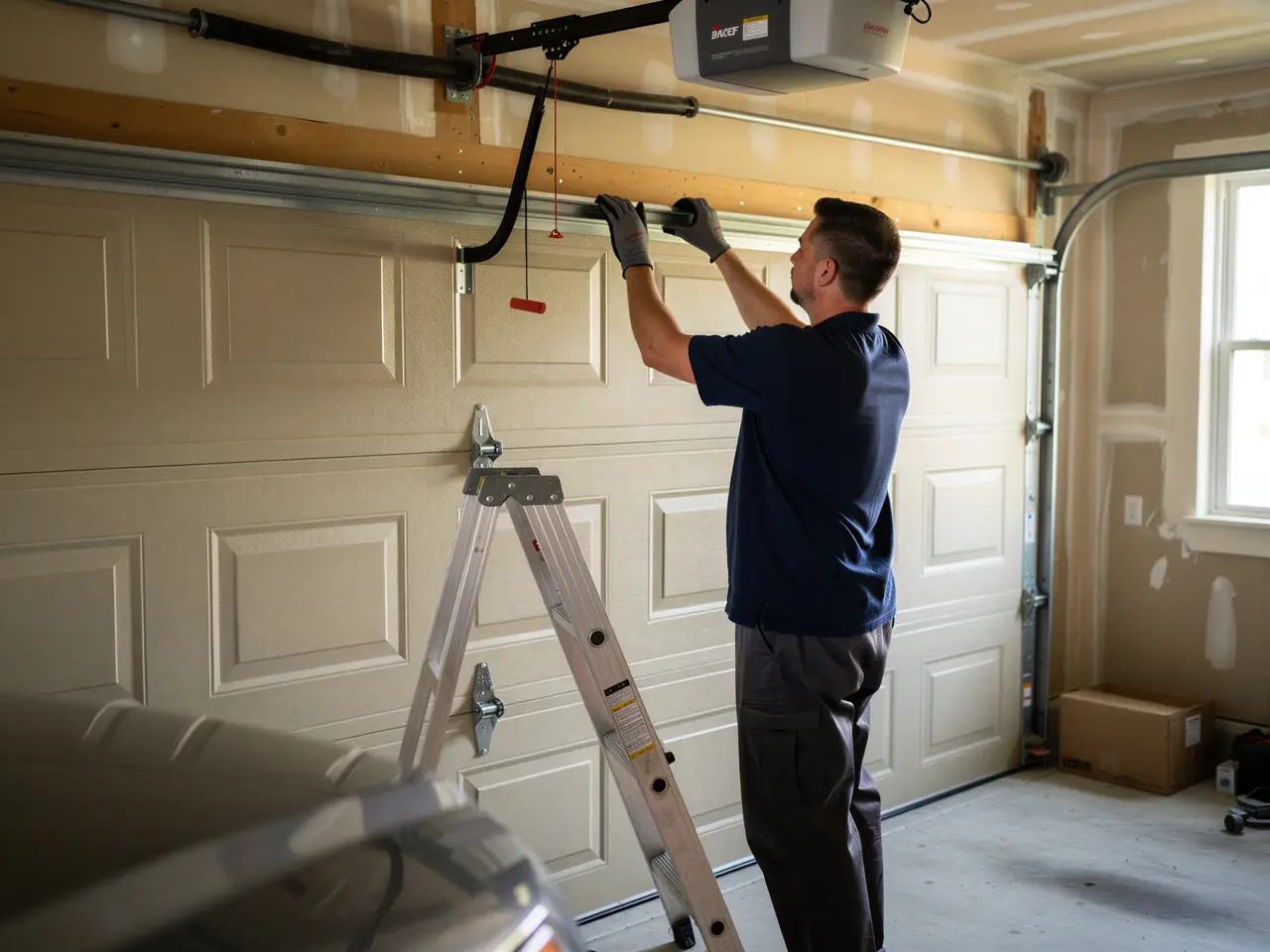
Lecompton is small enough that we know what's on the trucks before we leave Topeka. With about 258 households in the area, most opener calls here aren't random - they cluster around the same housing stock, built mostly in the 1960s and 70s with a median year of 1973. That means older doors with lighter panel weight than newer construction, often on brackets that were never sized for a heavier modern opener. We carry belt-drive and chain-drive units in half-horsepower and three-quarter-horsepower, plus the longer rail extensions some of these older headroom setups need. We also stock the battery-backup units, which matter more out this way since a short outage during a storm means the only door that still opens is the one with battery backup wired in. If your framing needs reinforcing before a new opener goes up, we bring that hardware too rather than making a second trip from 16 miles out.
What Can Go Wrong
The failure we see most in Lecompton isn't the opener motor - it's the mounting. A unit built in 1973 was likely fitted with whatever opener was popular at install, and decades of owners bolting replacements to the same ceiling bracket without checking the wood underneath leaves soft, stripped anchor points. New openers are often heavier than what they replace, and that combination surfaces fast: the unit sags, the travel sensors misalign, and the door reverses for no obvious reason. Cold-weather callbacks are common too. In this climate band, grease on an older chain drive thickens in winter and drags the opener's gears harder than they're rated for, which shortens motor life on units that are already working against a door that's heavier than it should be.
Why This Fails Locally
This isn't a generic opener problem - it's what you get when a 1973-era door frame meets a modern opener spec. Housing stock across the wider Topeka area built in this window used lighter track and shorter headroom clearances than homes built after 1990. An opener rated for today's standard door weight, installed without adjusting the force settings for a lighter vintage door, will slam the door down harder than the springs expect, which wears the cables and rollers faster than normal. We see this pattern across the smaller surrounding communities with similar-era housing, not just here, but a town the size of Lecompton doesn't generate enough call volume on its own to justify guessing - we set force and travel limits to the door in front of us, not a factory default built for a newer, heavier panel.
What It Costs
We don't have a fixed number to publish for a job this far from Topeka, since drive time and what we find once the opener's on the bracket both affect it. What we can say: a straightforward swap onto sound framing costs less than a job where we also have to replace a bracket, add blocking, or rewire for battery backup - common on houses from this era. With 2,382 owner-occupied houses across the wider service area and a median household income here running higher than much of that area, cost isn't usually the deciding factor for Lecompton calls; getting the right unit matched to an older door is. We'll tell you upfront if your existing hardware needs work before the opener goes in, rather than quoting the install alone and surprising you later.
The DIY Question
A lot of homeowners can hang a modern opener kit themselves if the bracket and track are solid. Where it gets risky is exactly the condition common in Lecompton: a door built around 1973 with hardware that's been patched over the years. Getting the travel limits and force settings wrong on an older, lighter door isn't a convenience issue - it's a safety one, since an opener that doesn't reverse properly on an older door can keep closing on something in its path. If your garage was built before 1990 and the bracket has been reinforced more than once, that's the point where we'd tell you to call rather than finish the job yourself. We won't talk you out of a repair that's genuinely within reach, but we also won't pretend every bracket here is rated for what a new opener weighs.
Frequently asked questions
Do you have a branch in Lecompton?
No. We're based in Topeka and drive out to Lecompton, about 16 miles away, for opener installs and repairs. There's no local depot, so we schedule the trip rather than offering a same-hour walk-in.
Will a new opener fit my older garage door?
Usually yes, but the mounting and force settings need adjusting for houses built around 1973, which is the median age of construction in this area. We check the bracket and track before installing rather than assuming a modern kit bolts straight onto older hardware.
Is battery backup worth it for an opener here?
Given the colder winter conditions in this part of Kansas, we think it's a reasonable add-on, especially if losing opener power during a storm would mean the garage is your only way in or out. It's an optional upsell, not something we push on every job.
How long does an opener install take?
We don't quote a fixed time for Lecompton calls specifically since it depends on what the bracket and wiring look like once we're there, which varies more on older houses than newer ones.
Book garage door service in Topeka
Call now or request a quote - tell us what the door is doing and where you are.