
Topeka, KS · Garage Door Service
Panel Replacement for Carbondale's 1970s Garage Doors
Panel replacement for Carbondale homes built mostly in the 1970s. We match sections on steel doors that are 15 miles from our Topeka shop and often out of production.
- Repairs & new doors
- Springs & openers
- Serving 8 nearby communities
Why This Fails Locally
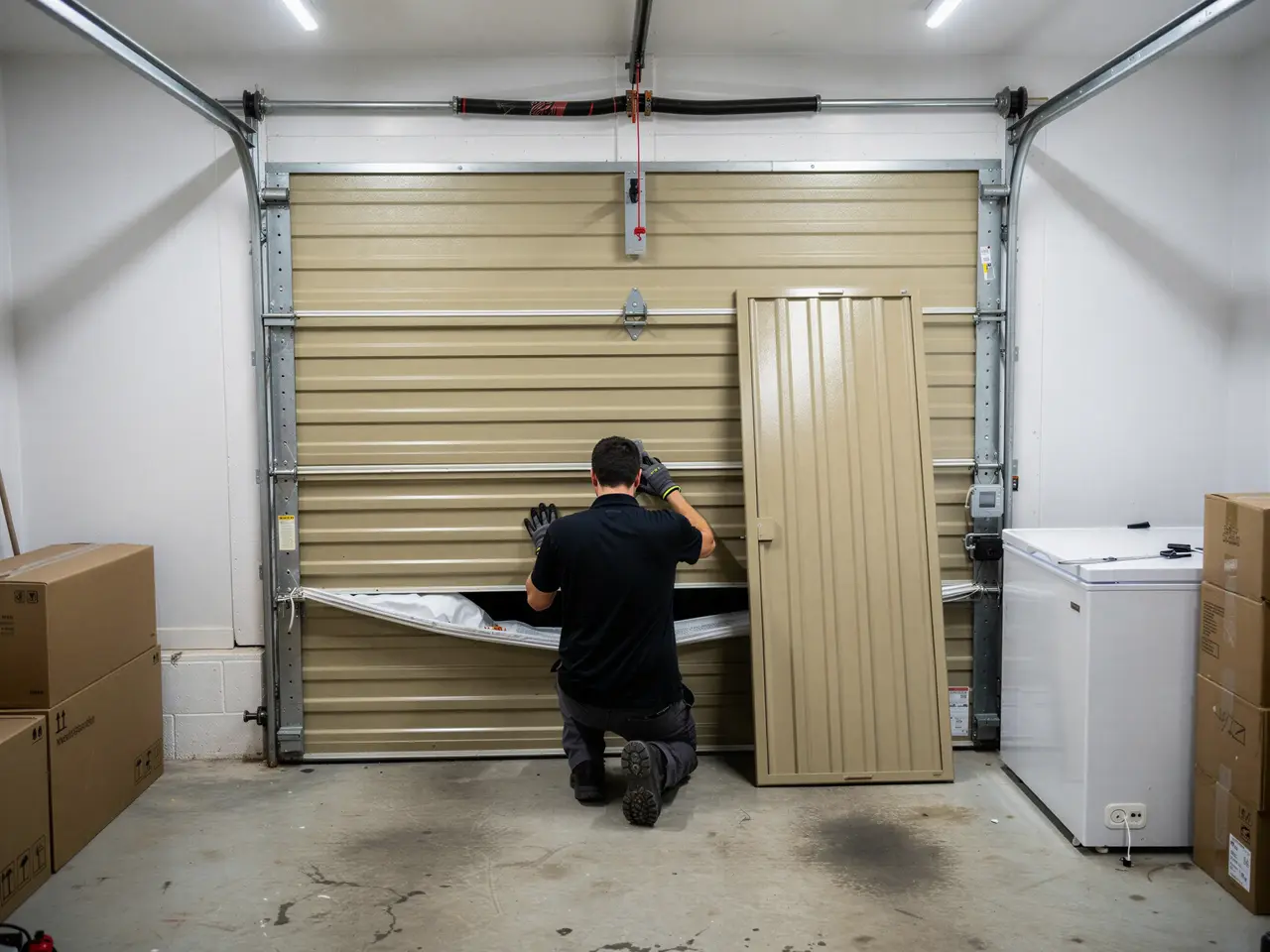
The fault we see most in Carbondale isn't a dented panel by itself - it's a dented panel on a door where the rest of the sections are long out of production. A single bent panel on a steel door looks like a quick fix until you try to match it, and that's where this town's housing stock works against you.
Most garages around here went up when the area was being built out between 1961 and 1990, with a lot of it centered close to 1975. A door installed in a house built in the mid-70s is a door style that manufacturers stopped making sections for decades ago. When a car backs into one panel, or a wind gust tears a bottom section loose, you're not looking at a shelf part - you're looking at a search for a compatible profile, or a full door.
We make the drive from Topeka, about 15 miles, and the call we get most from this side of the service area is someone who tried to order "just the one panel" online and got a part that doesn't match the groove spacing or the panel height on their existing door. That's a 1970s-door problem, not a Carbondale-specific defect, but it shows up here more than in newer subdivisions because so much of the housing stock is that age.
What It Costs
A single matching panel, when we can source one close to the original profile, costs less than replacing the whole door - but on a door this old, matching isn't guaranteed, and that changes the math. We don't carry a price list here because the real driver isn't the town, it's whether your specific panel style is still made by anyone.
With 575 households in the Carbondale area and a median income of $67,578, we hear the same question a lot: is it worth paying for a color-matched, profile-matched single panel, or do you put that money toward a full replacement and stop chasing parts. If your door is already showing rust at the bottom sections or the steel has started to oxidize along the seams, patching one panel often means you're back in the same spot in a year or two.
We'll look at the door, tell you honestly what a matching panel would run versus a full swap, and let you decide. We don't push full replacement on someone who just needs one section fixed - but we also won't sell you a mismatched panel and call it done.
The DIY Question
Ordering a panel online and bolting it in yourself is possible on some newer doors with standardized sections. On a door from the Carbondale area's typical 1975 vintage, it's a harder gamble, because the panel height, the groove spacing for the rollers, and the hinge placement were never standardized the way they are today.
If you order a panel that's close but not exact, you can end up forcing a track alignment problem that didn't exist before - the door binds, the opener strains against it, and you've traded a cosmetic dent for a mechanical one. That's the honest limitation here: we can't always get an exact factory match either, since a lot of these panel styles simply aren't manufactured anymore. When that happens, we tell you before we order anything, not after.
What we can do that's harder to do alone is test-fit a panel against your existing hardware before committing, and catch a mismatch before it's installed. If you're set on doing it yourself, measure the panel height and the number of roller grooves first - that's what trips people up most on doors this age.
What Can Go Wrong
On a door built around the mid-1970s, the steel is thinner than what's sold today, and a panel that's been dented once is often already fatigued along the seam before the second dent happens. We see owners patch a bent panel, then six months later the section next to it starts creasing under the same stress point.
Cold winters put a second strain on older steel panels - the Topeka area sits in a cold climate band, and a panel that's already weakened from a dent handles the seasonal temperature swing worse than a fresh one. A crack that starts small at -10°F can widen fast by spring.
The other failure we see is cosmetic mismatch: even when a panel can be sourced, the finish and gauge from a newer replacement section often doesn't weather the same way as 45-to-60-year-old factory steel, so the new panel ages differently and stands out more over time, not less. We'll flag that before you commit to a partial repair so it's not a surprise later.
Frequently asked questions
Can you match a panel on a door this old?
Sometimes. It depends on whether the manufacturer who made your door is still in business and still produces that profile. We check before we order anything, and if a match isn't available, we'll tell you plainly rather than send a part that doesn't fit the existing sections.
Do you have a shop in Carbondale?
No. We're based in Topeka and drive out to Carbondale, about 15 miles, for every job. There's no local branch or depot here - just the one crew traveling from Topeka.
Is it cheaper to replace one panel or the whole door?
A single matched panel usually costs less upfront than a full door. But on a door from the area's typical 1970s build, if the panel can't be matched, or the rest of the door is already rusting, a full replacement can be the better value over time.
Why does my panel keep denting in the same spot?
Older steel panels fatigue at the dent site. Once the metal has been bent once, it's weaker there, and repeated stress - including cold-weather contraction - tends to crease the same spot again rather than a new one.
More garage door services in Carbondale
Book garage door service in Topeka
Call now or request a quote - tell us what the door is doing and where you are.