
Topeka, KS · Garage Door Service
New Garage Door Installation for Carbondale, KS Homes
Carbondale's housing dates mostly to the mid-1970s. See why that build era matters for a new garage door install and what the job involves out here, 15 miles from Topeka.
- Repairs & new doors
- Springs & openers
- Serving 8 nearby communities
Why This Fails Locally
Most houses in Carbondale went up around 1975. That one number tells us more about the garage door problem than anything else. A door from that era was almost always a single-layer steel panel or a wood sectional, hung on extension springs running along the horizontal tracks instead of a torsion bar over the header. Extension spring setups were cheap to build in the 1970s and they're still common out here, which means a lot of these original openings have never been touched since the house was framed.
That matters when you're installing new. The rough opening, the track spacing, even the header clearance were all built to 1970s door specs, not to what ships today. A new door - especially anything with heavier insulated panels - often needs the jambs squared up and sometimes new track brackets before it will hang right. This isn't a Topeka problem or a Rossville problem. It's a Carbondale problem because of when Carbondale was built, and it's the first thing we check before we quote anything.
What It Costs
We don't post a flat number here because no two openings from this era measure out the same, but a few things specific to this area shape the estimate. Household income across Carbondale runs lower than the wider service area average of $71,875, and we see that reflected in what homeowners ask for - a lot of requests for a straightforward steel door done right rather than a high-end custom build. There's nothing wrong with that; a well-installed standard door on a 575-household town like this one holds up just as long as a premium one if the hardware underneath is sound.
The other local factor is climate. This area sits in a cold-moderate band, which means an uninsulated door - common on these 1970s-era openings - is worth replacing with an insulated panel even if the budget is tight, since the heat loss through a bare steel door adds up over a Kansas winter. We'll tell you straight if a repair on the old door would get you through another few years cheaper than a full install. Sometimes it will.
The DIY Question
If your garage was built when Carbondale's housing stock went up - mid-1970s - there's a decent chance you're looking at exposed extension springs stretched along the horizontal track, with no containment cable running through them. That's the part we won't talk you through doing yourself. A spring under tension letting go near your hands or face is the single most common serious garage door injury, and the extension-spring style from this era has less built-in safety margin than a modern torsion system.
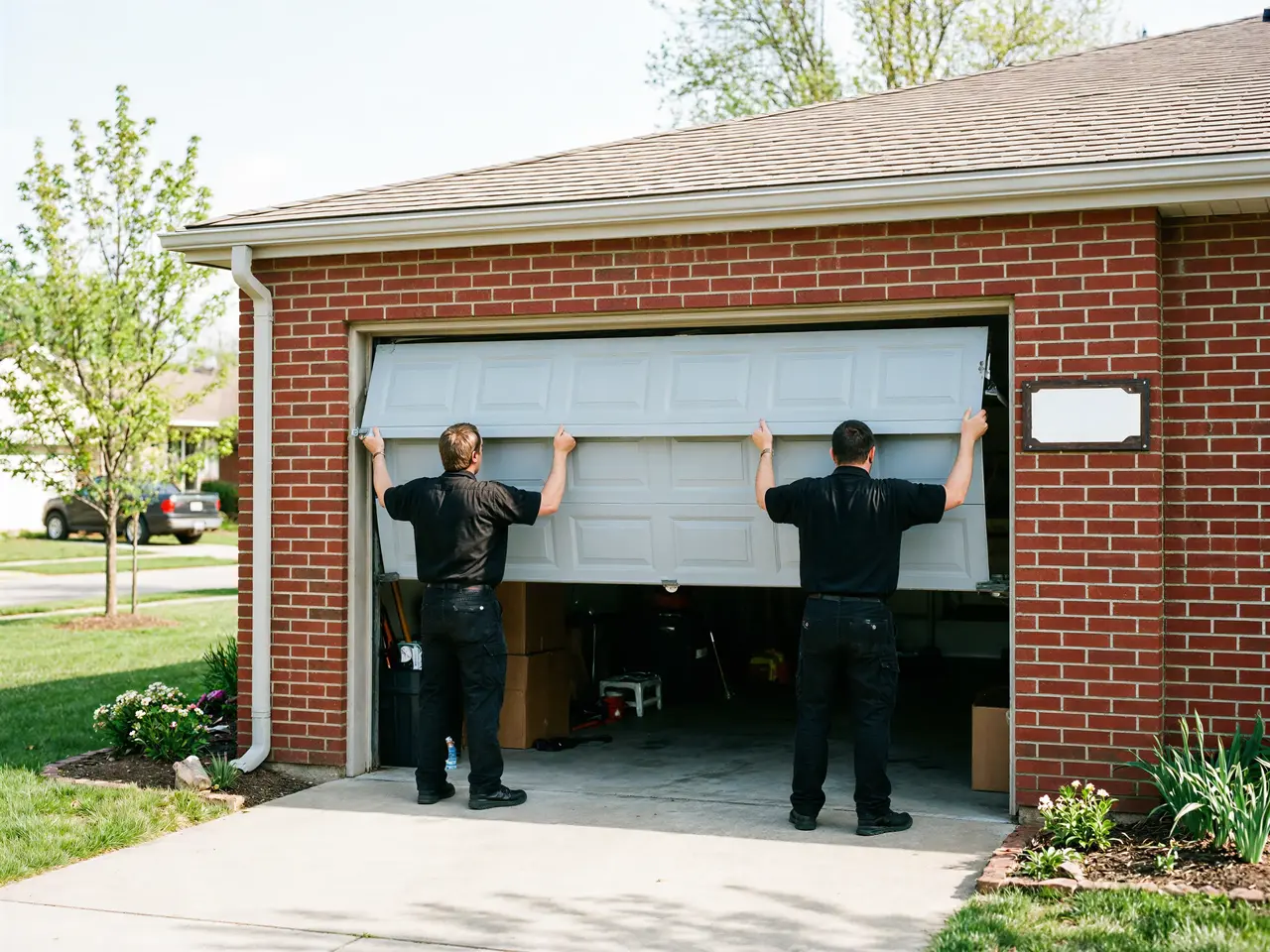
Measuring your opening, picking a panel style, even swapping a broken roller - fine, do it yourself if you're handy. Pulling the old door off its track and setting a new one with its spring system is a two-person job with the right bars and clamps, and we'd rather tell you that up front than have you find out why the hard way. We travel out from Topeka for this work; we're not going to talk you out of a job you can safely do, but spring and cable work isn't one of them.
What Can Go Wrong
The most common surprise on a Carbondale install is the opening itself. Houses built around 1975 were framed to the door sizes sold then, and a lot of those don't match today's standard panel widths exactly. We've seen jambs out of square by enough that a new door won't seal properly against the weatherstrip until the framing gets shimmed or rebuilt at the header.
Second is the spring system swap. If your current door runs on extension springs along the track - typical for this era - and you're moving to a heavier insulated panel, that spring setup usually needs to be replaced entirely, not reused. Undersized springs on a heavier door wear out the opener fast and can let the door slam on its own track.
Third, because we're running a truck out 15 miles from Topeka rather than out of a local branch, it's worth telling your installer up front if the opening has anything unusual - a low header, an uneven slab, a door that's been patched before - so the right hardware is already on the truck instead of getting discovered on site.
Frequently asked questions
Why does the age of my house matter for a new garage door?
Carbondale's housing mostly dates to the mid-1970s, and doors from that period were built to different rough-opening standards and spring systems than what's sold today. A new door often needs the jambs or track brackets adjusted to fit right, which is why the install can look different here than on a newer house.
Do you have a crew based in Carbondale?
No. We run out of Topeka, about 15 miles away, and schedule Carbondale jobs on the truck route out here. There's no local branch, so it helps to flag anything unusual about your opening ahead of time so we bring the right parts.
Is it worth insulating a new garage door in a cold climate area like this?
Given the cold-moderate winters this area sits in, yes - an insulated panel cuts the heat loss you'd get through an old uninsulated steel door, especially if the garage shares a wall with living space. It costs more up front but it's a reasonable call for this climate.
Can I reuse my old springs with a new door?
Usually not if you're upgrading to a heavier insulated panel. The extension springs common on 1970s-era Carbondale garages are sized for the original lighter door. A heavier new one on the same old springs wears out the opener and can make the door run unevenly.
More garage door services in Carbondale
Book garage door service in Topeka
Call now or request a quote - tell us what the door is doing and where you are.