
Topeka, KS · Garage Door Service
Opener Repair for Perry's 1970s-Era Garages
Perry homes went up mostly around 1978, which means chain-drive openers on steel track - not the belt-drive units common in newer builds. We travel from Topeka to fix them.
- Repairs & new doors
- Springs & openers
- Serving 8 nearby communities
What Can Go Wrong
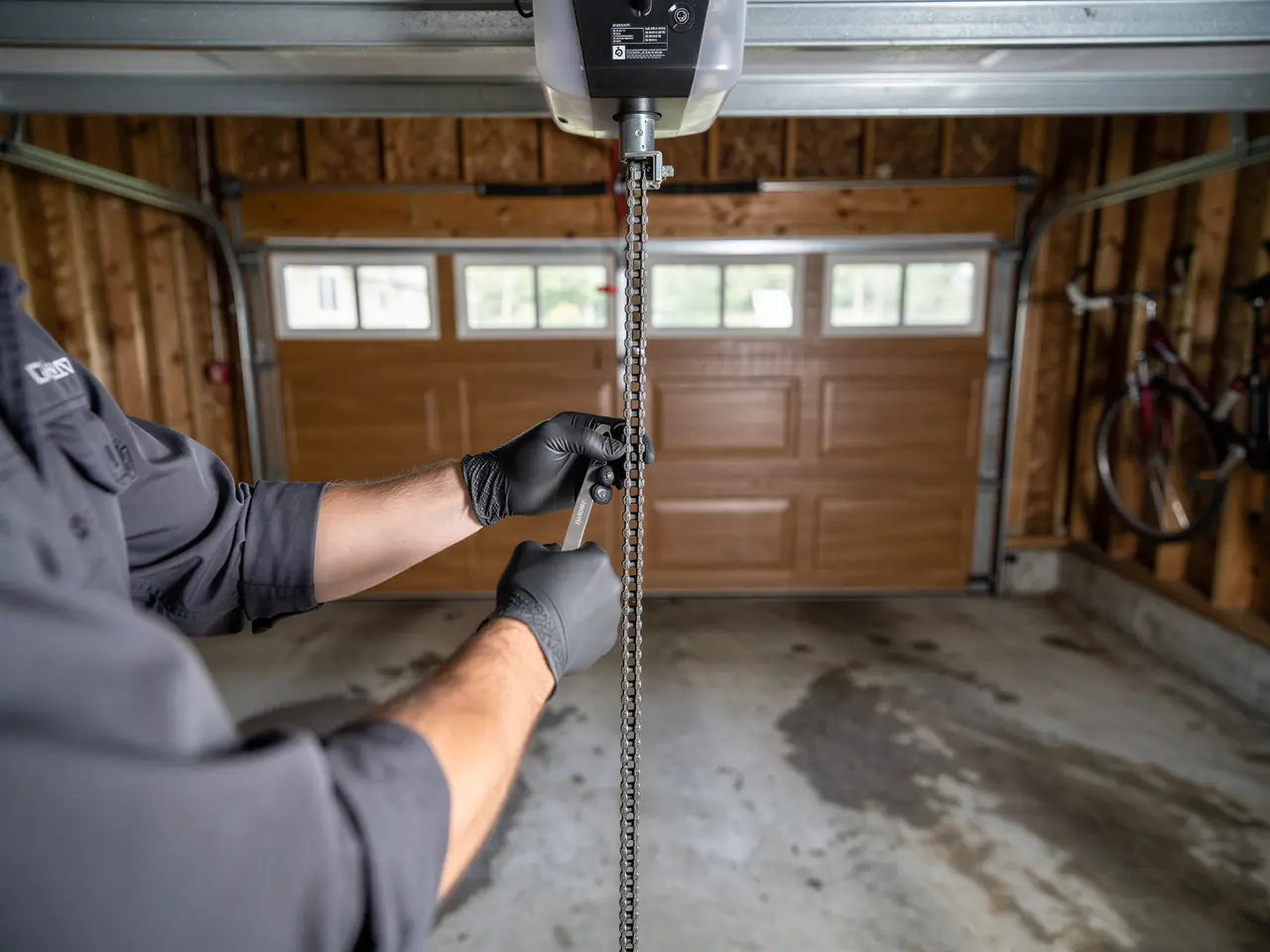
Most houses in and around Perry went up around 1978, which puts a lot of original or first-replacement openers from the chain-drive era still bolted to the ceiling. Those units run on steel roller chain, not belt, and the logic boards inside them were never built to talk to a phone app. What fails first is predictable: the capacitor that gets the motor spinning, the drive gear that strips after years of chain tension, or the travel module that loses its mind after a power blip. On a house built in 1978 you're also looking at an opener that may already be a second or third replacement, which means the mounting bracket and the header board behind it have been drilled more than once. That matters when we're hanging a new unit - old wood doesn't always hold new lag screws the way it held the original ones.
How We Fix It
We start by running the opener through its full cycle and listening to it, because a motor that hums but doesn't turn the gear tells us something different than one that turns the gear but won't release the latch. Chain-drive units from this era usually need a gear-and-sprocket kit or a new capacitor before they need full replacement - we check which one it is before we quote anything. If the logic board is dead, we test the wall control and the safety sensors separately, since on a lot of these setups the sensors were added later and wired in a way that doesn't match newer code. We carry the truck out from Topeka, so we diagnose and fix in one visit where parts are on hand, rather than guessing over the phone.
Why This Fails Locally
Cold winters matter here. The region sits in a moderate-cold climate band, and openers that sit in an unheated garage see real temperature swings between a January morning and a July afternoon. Steel chain contracts in the cold and can bind on drive gears that were already worn from forty-plus years of cycles. That's a different failure pattern than you'd see on a newer belt-drive opener, which flexes instead of binding. On a street of houses built around the same year, we tend to see the same opener fail around the same age, just staggered by a few winters depending on how often that specific door gets used.
What It Costs
We don't quote a number without seeing the unit - a capacitor swap costs a lot less than a full opener replacement, and we're not going to sell you the second when the first fixes it. What we can tell you is that median household income in this area runs higher than the wider Topeka service area, and that tends to mean more owners choosing full replacement with a newer belt-drive unit rather than patching a forty-year-old chain-drive motor one part at a time. Either way is a reasonable call - we lay out both before you decide.
Parts We Carry
On the truck we keep the parts that fail most on 1960s-through-80s chain-drive openers: start capacitors, drive gears and sprockets, travel modules, and wall controls that match older terminal layouts. What we don't keep in stock is a board for every proprietary logic system ever made - some manufacturers stopped supporting units from this era years ago, and if yours is one of those, we'll tell you straight that replacement is the faster, cheaper path rather than waiting on a part that may not exist anymore.
How It Shows Up
With roughly 429 households spread through this area, we see the same few complaints over and over: the door reverses halfway up for no reason, the remote works from the driveway but not from the street, or the opener runs but the door doesn't move at all. That last one is almost always the drive gear giving out, not the motor itself - a distinction that saves a homeowner from paying for a new unit when a twenty-dollar gear would've done it. We make the seventeen-mile run from Topeka for these calls regularly enough that we know which symptom points to which part before we even open the housing.
Frequently asked questions
Why does my opener grind but the door won't move?
On the chain-drive openers common in houses built around 1978, that grinding is almost always the drive gear - a nylon part inside the motor housing that wears out from decades of cycles. The motor keeps running, but it's no longer turning the chain. It's a cheap part and a quick swap, far less than replacing the whole opener.
Do you carry parts for older openers out to Perry?
Yes. We stock capacitors, drive gears, travel modules, and wall controls on the truck that fit the chain-drive units common in homes from the 1960s through 80s, and we travel from Topeka for the call. If the specific logic board isn't something we can still source, we'll tell you that up front rather than make you wait on it.
Does cold weather really affect an opener?
In this moderate-cold climate, yes - steel chain contracts in low temperatures and can bind on a drive gear that's already worn. That's a different failure than a belt-drive unit, which flexes rather than seizing. If your opener struggles more in winter than summer, the chain and gear are the first things we check.
Should I repair or replace an old opener?
Depends what's wrong. A bad capacitor or stripped gear is a cheap, quick fix on most units from this era. But if the logic board is dead and the manufacturer stopped supporting it, replacement is usually faster and cheaper than chasing a part that's hard to find. We tell you which situation you're in before quoting anything.
Book garage door service in Topeka
Call now or request a quote - tell us what the door is doing and where you are.