Topeka, KS · Garage Door Service
Panel Replacement for Overbrook's 1968-Era Doors
Overbrook homes mostly went up around 1968 - original steel panels on hardware nobody stocks anymore. Panel replacement from Topeka Garage Door Pros, 19 miles out.
- Repairs & new doors
- Springs & openers
- Serving 8 nearby communities
How Long It Takes
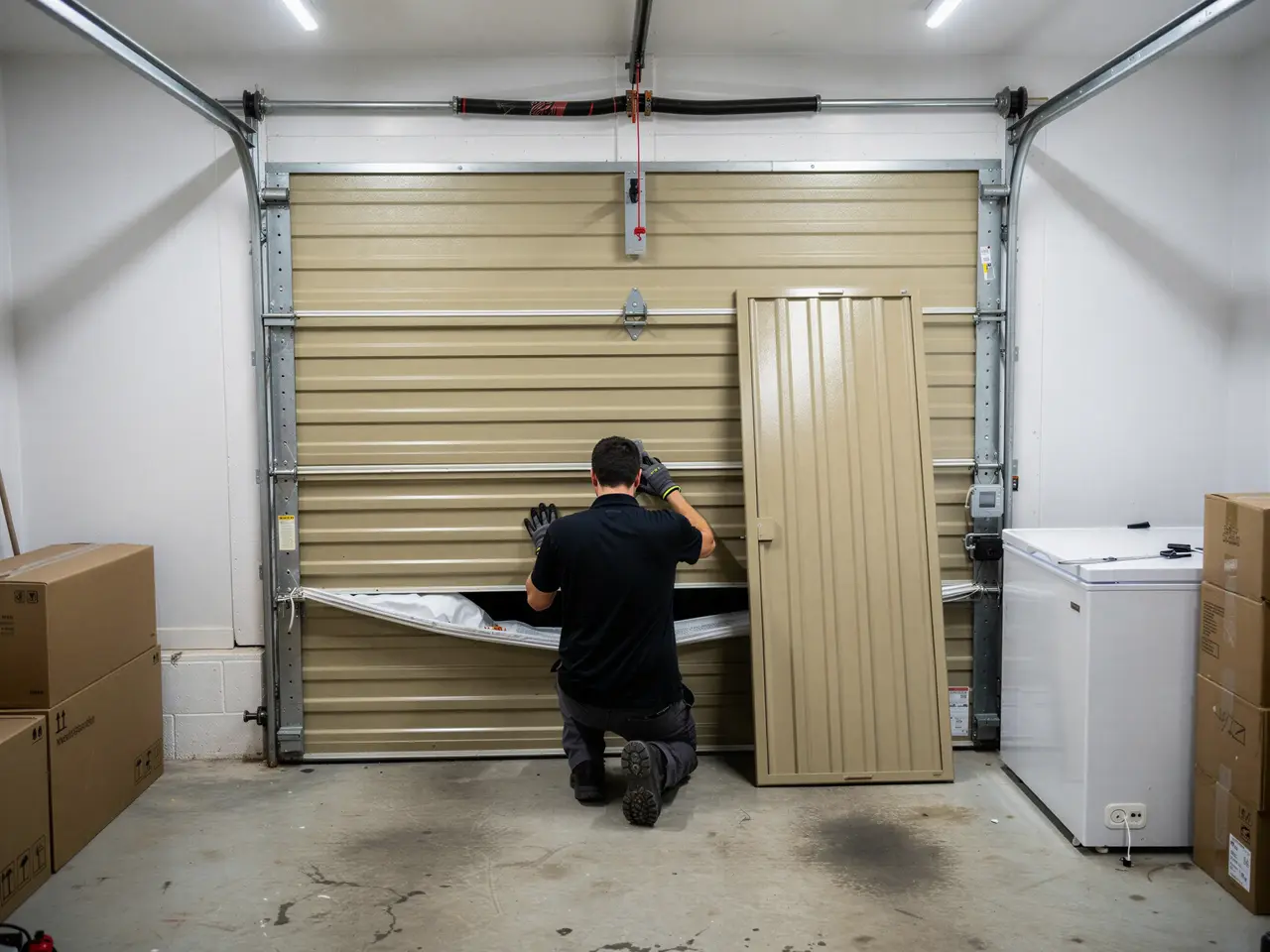
Most garage doors standing in Overbrook today went up around 1968, which puts the original panel sets squarely in the steel-and-foam era before manufacturers standardized section heights the way they do now. If your door has never had a panel replaced, odds are good the whole assembly is still wearing its build-year hardware - same hinges, same end stirrups, same track gauge. That matters for timing: once we confirm the section height and the track width on site, a single bent or rusted panel on a door that age usually swaps out in one visit, same day in most cases. Where it runs longer is when the replacement panel has to be special-ordered because the door's width or the hinge spacing doesn't match anything a supplier keeps on the shelf - not uncommon on doors from the late 1960s. We're driving in from Topeka, about 19 miles, so we schedule the visit once we know whether the part is in stock or has to be ordered, rather than showing up twice. A full measure-and-order job, when it's needed, typically means one trip to look and one trip to install.
The DIY Question
A single dented panel looks like a bolt-off, bolt-on job, and on some doors it almost is. The catch with Overbrook's older stock is that the panel sections are frequently riveted rather than bolted, and the hinges holding adjacent panels together have usually corroded into place after five-plus decades in a cold-climate winter. Force one loose with a socket wrench and you can crack the neighboring panel or bend the hinge tab, turning a one-panel repair into a two-panel one. There's also the spring question: on a double door, removing a bottom or second-row panel changes the balance the torsion spring is fighting, and an improperly supported door can drop. If the damaged panel is high up and the door still runs true, a careful owner with the right tools can sometimes pull it themselves. If it's a bottom panel, if the door binds in the track, or if you're not sure the hinge will come off clean, that's where we'd stop and call it in rather than push through it.
Parts We Carry
Panel stock for a door built around 1968 is not something you find at a home center. We carry replacement sections and matching hinges sized for the common widths used on homes from that build era, along with end stirrups and roller sets that fit the older track gauge still found on original hardware. Where we run into trouble is color and texture match on doors that were repainted or resided over the decades - sometimes a replacement panel is a close match, sometimes it's visibly off until the whole door gets a fresh coat. We're upfront about that before the work starts. If your door's panel profile is unusual enough that nothing in stock fits, we'll tell you that too rather than force a part that doesn't seat right.
What It Costs
We don't publish a flat number for panel work because the two biggest cost drivers - whether the panel is a stock size and whether the hinges and stirrups need replacing along with it - aren't known until someone's standing in front of the door. A door with original 1968 hardware is more likely to need the surrounding hinge set replaced at the same time as the panel, since 50-plus-year-old steel hinges rarely come off clean enough to reuse. That pushes the job past a simple one-for-one panel swap. We give you the number after the on-site look, broken out so you can see what's panel and what's hinge and roller hardware.
How It Shows Up
In Overbrook, panel failure usually isn't an accident so much as the end point of a long history of rust and door-opener stress on hardware that's outlived its expected life. A dented panel from a backed-into car is the exception; a bowed or rusted-through panel at the bottom of the door, where water pools and road salt splashes, is the rule. Cold-weather swings common to this part of Kansas make steel more brittle in winter, so a panel that's been quietly thinning for years is more likely to crack or buckle during a hard freeze than in July. If your door is still running on the stirrups and hinges it shipped with, a new panel is doing its job holding against old hardware - something worth having us check while we're there.
Frequently asked questions
Is my garage door old enough that parts are hard to find?
If your Overbrook home was built around 1968, which is typical for this area, the original panel width and hinge spacing may not match current stock sizes. We check this on site before quoting, since it determines whether a panel swap is a same-day job or a special order.
Do you have a branch in Overbrook?
No. We're based in Topeka and drive out to Overbrook, about 19 miles, for service calls. We schedule the visit once we know what parts the job needs so we're not making two trips for one repair.
Can I replace just the one dented panel, or does the whole door need to go?
Usually just the one panel, especially if the rest of the door is running true. The exception is when the surrounding hinges and stirrups have corroded past reuse, which is common on doors with original hardware from the late 1960s - then we replace those alongside the panel.
Why does my panel keep rusting at the bottom?
The bottom section sits closest to standing water and winter road salt, and it takes the brunt of freeze-thaw cycling each year. On older steel panels without modern coatings, that section thins out well before the rest of the door shows wear.
Book garage door service in Topeka
Call now or request a quote - tell us what the door is doing and where you are.